How to choose a helicopter ride over Barcelona
A helicopter ride over Barcelona is easy to enjoy and surprisingly involved to choose well. The city gives you several very different backdrops: the sea, the dense old streets, the hills, and landmarks that look quite different from above. A good choice depends less on finding the fanciest option and more on matching the flight to what you want to see, how much time you have, and how comfortable you want the whole day to feel.
The process becomes much simpler when you treat it as a short sequence of decisions. Work through them in order, and each answer narrows the next one.
Decide what you want the flight to show you
Start with the view, not the booking form. Barcelona rewards more than one kind of aerial route, and the best fit depends on whether you want a broad impression or a close look at a few famous places.
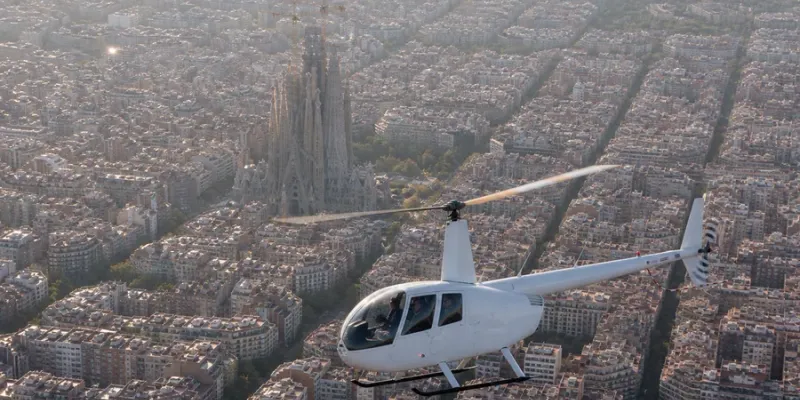
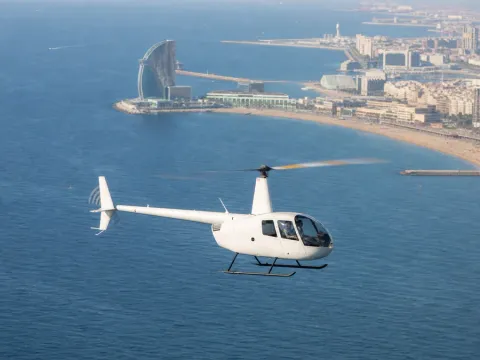
If the sea is the main draw, look for a flight route that follows the Barcelona coastline and gives clear views across the Port of Barcelona. This suits visitors who like open horizons, beaches, and the shape of the city where it meets the water. If architecture matters more, prioritise a route that gives an aerial view of the Sagrada Familia and the surrounding city blocks. If you enjoy history and green space, Montjuïc Castle can add a useful visual anchor on the inland side.
Watch for vague descriptions that promise "all the highlights" without saying how the aircraft will reach them. A clear route description is more useful than a dramatic adjective. Also think about time of day in general terms. Light can change the look of the city sharply, so a route that works at midday may feel quite different later in the day. You do not need to become an expert in photography to make this choice. Just ask whether you are hoping for bright, wide views or softer angles across buildings and water.
Set a realistic time frame
Next, decide how much of the day the flight should occupy. Flight duration is only one part of the commitment. Arrival, check-in, safety briefing, boarding, and time after the flight all matter, even when the airborne portion is short.
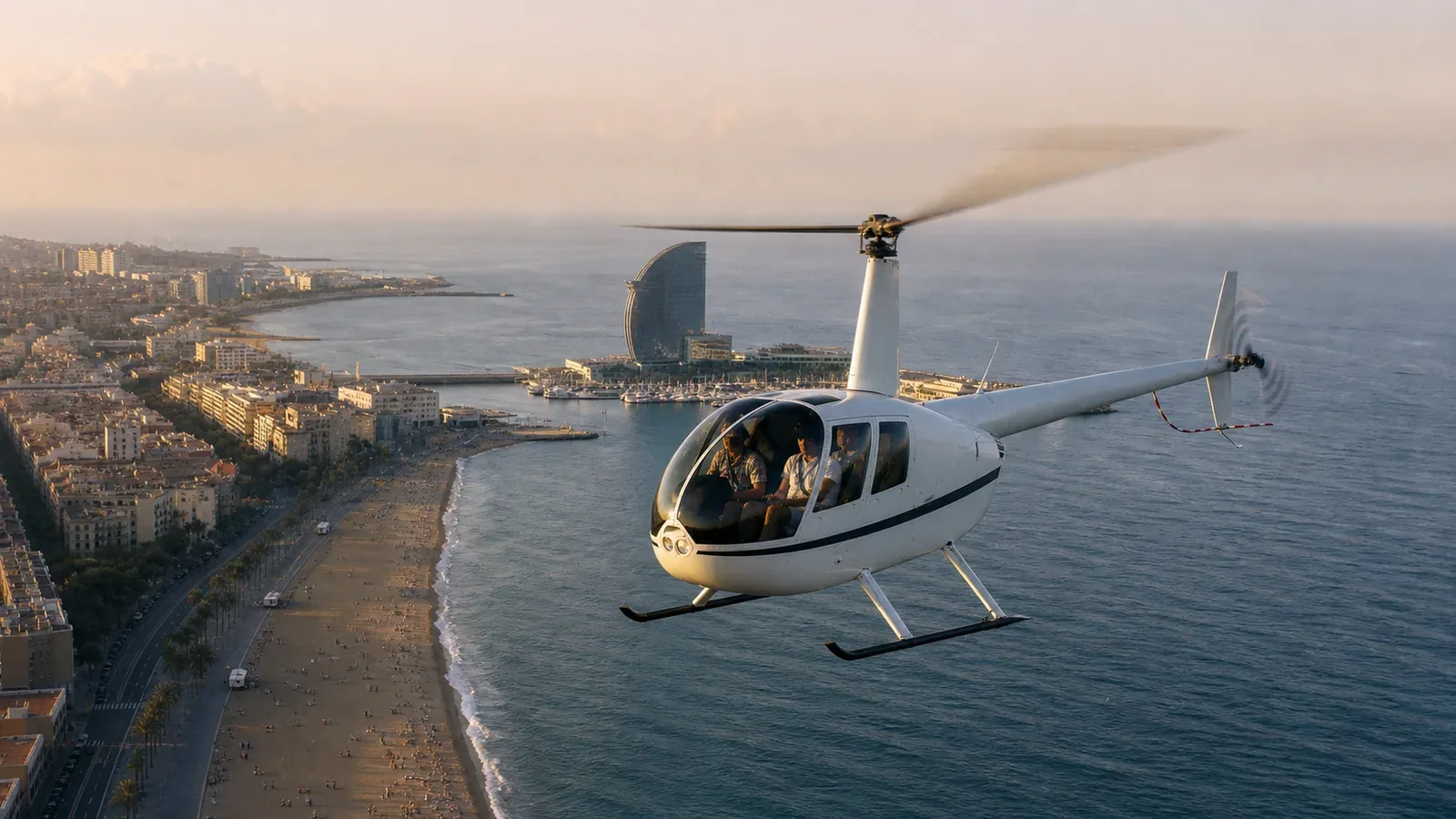
A shorter flight can still be memorable if the route is focused and the weather is clear. It also leaves more room for lunch, a museum visit, or a walk afterwards. A longer flight gives a better sense of the city's layout, but it can take a bigger bite out of a tight itinerary. The trade-off is simple: choose enough time to see the things you care about, without turning the ride into the only event of the day.
When comparing options, check whether the stated flight duration refers to time in the air or the whole visit. If that is unclear, ask before committing. Watch for plans that look convenient on paper but require a rushed transfer across the city. A calm start usually leads to a better experience than a frantic dash.
Choose the departure point with care
The helipad matters more than many people expect. A flight can be excellent once airborne, but a distant or awkward starting point can make the day feel disjointed. Look at where the departure point sits in relation to your hotel, your next stop, and the route you want to see.
If you are staying near the water, a coastal departure may fit naturally. If your day is built around the old centre, a more central starting point may save time. Think about the journey in both directions, especially in a city where traffic can be unpredictable. A short ride with a difficult transfer may not be the relaxed choice it first appears to be.
Also look for clear arrival guidance. A useful listing should make it easy to understand where to go, what to bring, and when to be there. If instructions are vague, ask for them early. You are not being difficult by doing this. You are avoiding the worst kind of stress, standing in the wrong place while the day slips away.
Read the route and the small print together
Once you have a shortlist, compare the details side by side. This is where a promising idea either becomes a sound choice or falls apart. A route should name the areas or landmarks in plain language, and the conditions should be just as clear. Pages such as helicoptertourbarcelona.com can be useful for checking how an option is presented before you make a decision.
Pay attention to what happens if the weather turns. Wind, low cloud, and poor visibility can affect flying, and a responsible plan will explain the general approach without making vague promises. Look for straightforward wording about changes, rescheduling, or alternatives. Avoid relying on a bold claim that bad weather will never interfere. That kind of statement is not a useful sign.
Also check what is included in the visit. Some details may seem minor until you arrive: whether there is a briefing, whether seats are allocated, whether photos are available, and whether there are limits on luggage. If you are travelling with children or older relatives, look carefully at any age, mobility, or comfort notes. These points are not just administrative. They shape how the flight feels from start to finish.
Match the flight to the people going
A ride for one traveller and a ride for a family are not always the same decision. Think about who will be on the day and what they are likely to enjoy. A person who loves heights may want a longer, wider route. Someone who is nervous may prefer a shorter flight with a calm, clear start and a route that stays close to familiar landmarks.
Seating can matter too. If one person is especially keen to see the coast, ask whether seat position can be considered. If someone wants to take photographs, ask about window access and whether phones or cameras are handled in a particular way during boarding. These details vary, so it is better to ask than to assume.
Think about the pace around the flight as well. A morning flight may suit a family with early energy and a later lunch. An afternoon option may fit a slower day. The goal is not to squeeze in the most dramatic ride. It is to choose a flight that leaves everyone glad they went.
Check the operator's safety culture without guessing
Safety should be part of the choice, but it should be assessed through clear information rather than guesswork. Look for visible signs of a professional setup: proper pre-flight briefings, defined passenger procedures, clear instructions at the departure point, and staff who can answer direct questions calmly. If something sounds casual in a way that makes you uneasy, ask for clarification.
Do not try to judge complex engineering or maintenance matters from a website alone. That is not a job for a passenger, and it is not something to improvise. What you can reasonably check is whether the operator communicates in an organised way and respects standard procedures. If a question is outside your knowledge, a clear answer from a qualified professional is more valuable than a confident guess from anywhere else.
On the day, listen carefully to instructions and follow them. Keep bags controlled, arrive with enough time, and avoid treating the briefing as background noise. A smooth passenger role helps the crew focus on the flight itself.
Compare value, not just the headline
After the practical checks, compare what each option actually offers. Look at the route, the total time involved, the starting point, the clarity of the booking terms, and the overall fit with your plans. A flight that includes the views you care about may be a better choice than a slightly longer option that spends time on areas you do not mind missing.
Some people choose based on the chance to see one landmark from a new angle. Others care more about the coastline, the city grid, or the contrast between buildings and hills. Neither approach is wrong. The useful question is whether the route gives you a strong version of the experience you are looking for.
This is also where the name helicoptertourbarcelona.com can serve as a reference point while you compare wording, route detail, and the general shape of the offer. Use it as one input among several, then judge whether the option fits your own schedule and expectations.
Make the final booking with clear expectations
When you are ready, confirm the essentials in plain language: the date, the departure point, the arrival time, the route, the flight duration, and what happens if conditions change. Save the confirmation and keep the key details somewhere easy to find on the day.
A good final check is to explain the plan to everyone going in a few sentences. Where are you meeting, how long will the whole visit take, and what will you see? If the answer sounds clear and relaxed, the choice is probably sound. If it still sounds confused, pause and resolve the confusion before booking.
Choosing well does not require expert knowledge of aviation. It requires a clear idea of the view you want, a sensible sense of time, attention to the departure point, and a willingness to read the conditions carefully. Do those things in order, and the flight itself becomes the easy part.